Community energy: A practical guide to reclaiming power
The Life of Your Group
Sustaining your group
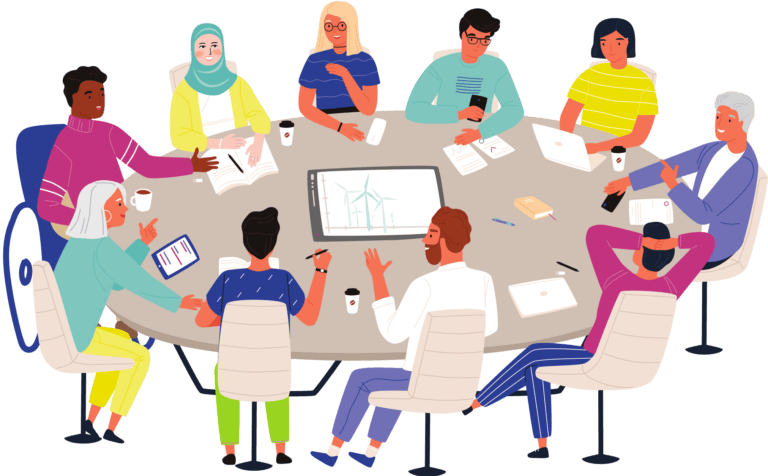
As you may begin to realise, building a community energy project takes time. It is not a quick campaign that you can win overnight, as it’s always the case when you are creating deep and lasting change for your community and the energy system. This means that your group will need to be strong to continue working together.
In the previous chapter, we shared tips to deal with problems when they arise: it’s good to be prepared and accept that at times, there will be problems. However even in a seemingly healthy group, it’s good to nurture the team spirit and make sure you are actively doing things to keep people engaged and inspired, and to bring new people into your core team.
If you join an existing community energy group (which is almost always more effective than starting your own project from scratch), spend a few months observing how things work and what kind of culture already exists. Notice who is happy and who might be in danger of leaving for whatever reason. You can then start to make suggestions and work with people who nurture the team.
You can look into tips from groups which practice community organising, who have a long history of working to build power in their community. You can find resources on this topic on the Leading Change Network’s website, or check out the work of Margeret Lewith or Saul Alinksy.
One of the most important things is that people stay inspired and remember why they are doing this work together. As Ursula from the OurPower cooperative says in the success story in the next chapter: “The most inspiring thing is to create change. You can’t do it alone, but if you have a trusting, focused, team of people who know each other well, you can change the energy system together.”
A core team of leaders
It is useful to think of your core team of people as a group of leaders working together. Try to ensure that responsibility to reaching out to different parts of your community is shared among the team. For example one person might have good contacts to farmers, or even better be a leader among the local farming community. One person might be an active parent in the local school and be respected as a leader in that part of the community.
When we talk about leadership, we mean the kind of leadership that is about facilitating and empowering others, as opposed to leaders who behave like divas or whose motivation is power and authority over others. In our vision, leadership rhymes with responsibility, the people who make sure things happen, who care that new people join the group. Leadership is the foundation of good organising. Develop your own, and support the leadership of others.
Understanding good leadership
A good organising project cannot succeed with a single leader, it requires a core team of leaders. Try to make sure you have a core team of 4-12 people who are taking responsibility and supporting each other. A good core team is like a snowflake, with each member reaching out to others in the community, who can then reach more people themselves. Just like a snowflake, it should be strong. Don’t be afraid to think of yourself as a leader, and think about ways to develop your own leadership. How are you supporting others to feel fulfilled in the project? Can you take more responsibility to ensure everyone feels momentum and inspiration?
-
Checklist | Ideas to sustain your team
More info
- You will need a core team that cares for each other to go the distance. Take the time needed to build up trust internally.
- Find the right rhythm of meetings for your group (for example every month).
- Make sure meetings are well facilitated and don’t run on forever. Long ineffective meetings will exhaust people — it’s a sure way to bring down motivation and lead people to leave the group.

- Make sure that good notes are taken in each meeting, and shared.
- Agree as a group that everyone does what they commit to. Progress towards your objectives is crucial to keep everyone excited. Even if community energy projects don’t get established straight away, it’s good to ensure that there is always a sense of momentum in the group.
- Bear in mind most team members will have obligations outside of the project, such as school, wage work or care work. Being a part of the project is an additional task that can be difficult for people to manage.
- In addition to meetings, plan fun activities where team members can have fun together. This can act as a break from the heavy work that you’ve been doing and you all deserve to reward yourself for taking action to democratise energy!

- A video about Organizing and Leadership.
- The leading change network has a great set of resources on everything to do with Organizing and creating apowerful group.