Community energy: A practical guide to reclaiming power
Choosing Your Activity
Electricity generation
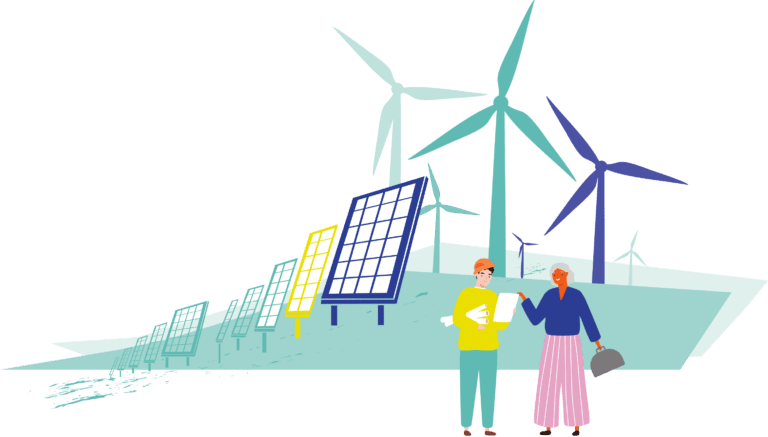
Community energy groups often start off thinking about producing energy. This makes a lot of sense because it has a big impact and brings many positive benefits:
- It directly increases the amount of renewable energy in the system, replacing polluting fossil fuels,
- It provides the community with an income once the upfront investment has been recovered.
- It helps build the 100% renewable energy system we need.
The type of energy source depends on your community’s resources and preferences. You can also start with one type of technology and add others as you grow. For example start with solar panels on a school, and move to wind production when you gain more experience.
Here are the key questions to get you started.
1) What are the resources in my area?
Start by mapping out the natural resources available: where does the wind blow in your area? Where would people be happy to have windmills or solar panels? What rooftops are south or west-facing and get a lot of sun?
Keep in mind the locations you choose will have an impact on how much money your project makes. You will need to make sure that you will be able to earn enough money to pay back any loans you have taken and fit with your business plan. While you may want to put solar panels on a particular roof, it may not receive enough sunlight to produce the amount of energy needed to make your solar panels profitable.Similarly, a spot you have chosen for your wind turbine may receive less wind than needed due to surrounding hills or other environmental factors. So be careful to also factor in the resources and how they impact the eventual income of the project.
2) What technology will provide you with the highest return on investment?
Depending on your community’s natural and regulatory environment, your best investment may be solar PV, wind, biomass, hydropower, geothermal power, or a mix of these technologies. You can start with one and then add other technologies as you grow.
3) Will it be possible to get a planning permit for your installation?
There are many issues related to permits that could prevent your project from seeing the light of day. Nearby pipelines, airplane routes or military bases can block a building permit — at least for the spot you’ve chosen. To avoid wasting your energy and time, make sure to check with your municipality which areas or spots won’t be available for planning. This will leave you and your community with more energy and motivation to work out the project plan!
4) Does your country, region or municipality provide financial support for your project?
One of the first things to check is if there is a support scheme of some kind for renewables. Many national governments have had financial schemes to increase renewables, however many of these are no longer running or are closing soon. Your local or regional government might have some funding or support available, so do some research in that area as well. Of course getting your local government involved or at least supporting your project is always a good start.
5) Can you sell the power, either to the grid or to the members, using the local grid to transport the power to the members?
-
Harnessing solar power: Coopérnico
 More info
Portugal
Founded in Portugal in 2013, Coopérnico is a renewable energy cooperative that harnesses solar power for the benefit of the local community. It started when founder Nuno Brito brought together 16 citizens to invest in a small solar plant. They now have more than 1,800 members, that invested over 1.7 million Euro in 28 solar stations, with a total peak capacity installed of about 1.9 MWp. As they are in southern Europe in Portugal focusing on Solar makes a lot of sense, but look around in your area and see if perhaps wind or hydro is more suitable.
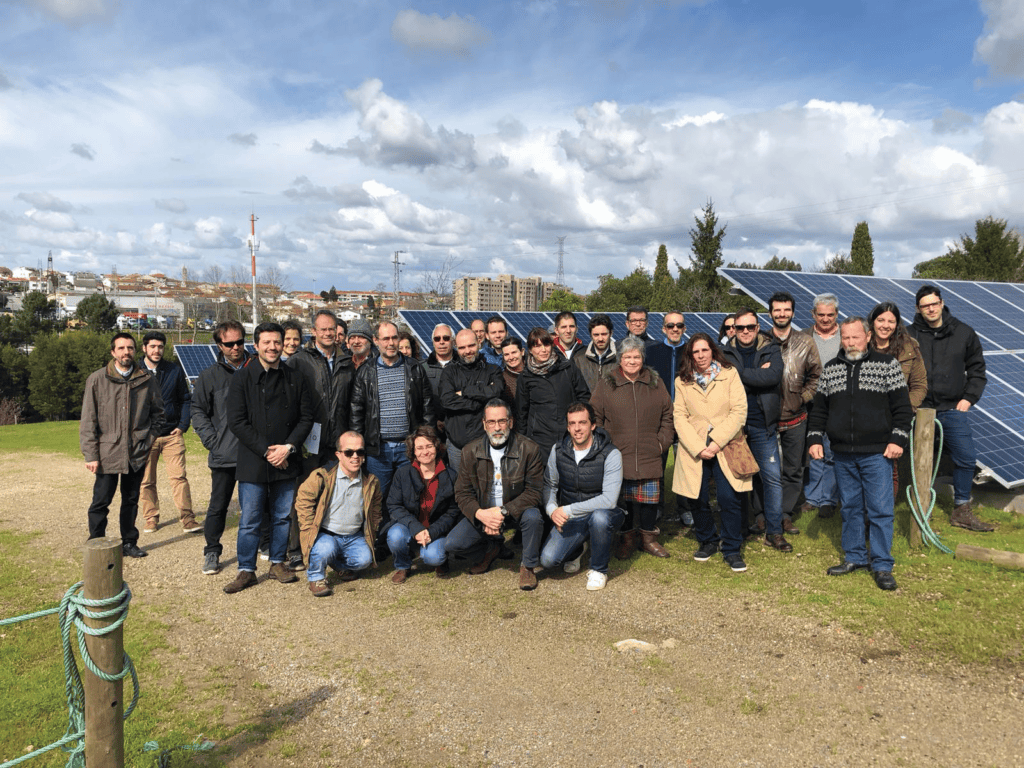
Some of the 1,800 members of Coopérnico renewable energy cooperative at their General Assembly. © Coopérnico One way that the cooperative works is that it rents the roofs of socially-orientated institutions for its PV projects, providing those institutions with extra income. At the end of the lease, the co-operative will offer the solar apparatus to the hosting institutions for free. The energy produced on these rooftops is fed into the grid and bought by the distributor at a fixed price.
Coopérnico is also active in the retail sector, which means that they can directly sell electricity to their members at a fair price, guaranteeing that the amount of electricity produced by Coopérnico’s projects is more than the one consumed by its members. This is part of what has allowed them to become very successful.
Currently Coopérnico is focused on three main areas – renewable energy production, the commercialization of energy for its members and energy efficiency. They have a mission that included these four points:
- 100% renewable energy all electricity is produced exclusively from renewable energy sources
- Social value creation all their projects create social value, either by close collaboration or the sharing of revenues with organizations operating in the social economy
- Developing local economy they prioritize working with local partners when they develop a new project. This creates local jobs and promotes the transition to a sustainable economy
- Integrity and transparency Coopérnico see these as the basis for long and trusting relationships. Updated information on their projects is shared with all the members that have supported them.

-
We are energy: Som energia
More info
Spain
Som Energia means “we are energy” in Catalan. Som Energia was the first energy cooperative established in Spain. The cooperative was founded by 150 citizens in 2010, who were inspired by Ecopower in Belgium and Enercoop in France. Most citizens can’t afford to build wind, hydro or solar projects alone, but Som Energia offered the possibility to work together to support renewable energy from regional sources. The non-profit organisation started out by purchasing local green energy from existing sources, so members could buy affordable electricity.
Meanwhile, Som Energia built its own solar installations and worked on new renewable production projects with its local groups. The goal was to produce enough electricity to meet 100% of the members’ consumption.
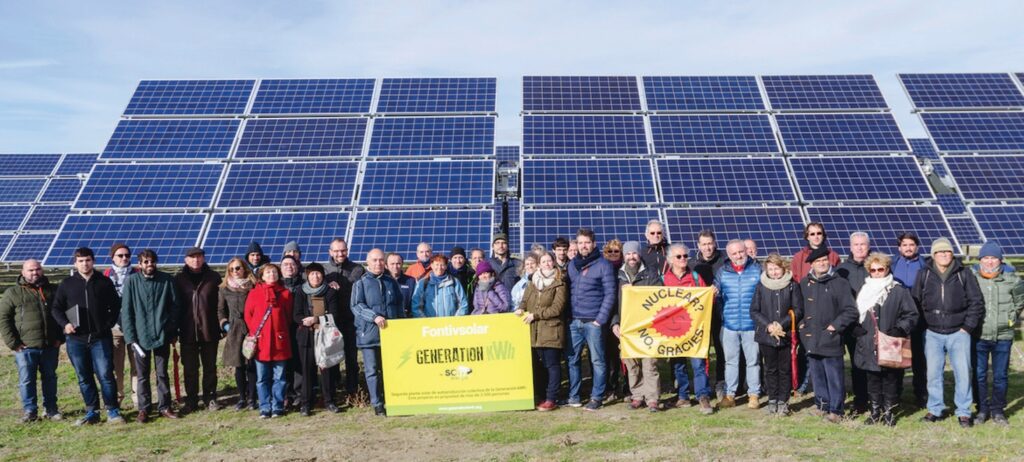
PV installation financed by Generation kWh (Som Energia’s investment model), providing electricty to 690 homes. © Som Energia Seven years later, the project had 47,000 members. Today, Som Energia has nearly 68.000 members. To date, more than six thousand members invested a total of €15,000,000 in the project. After the Spanish government suddenly stopped providing financial support, Som Energia came up with an innovative new financing system called Generation kWh, to set up new projects against market price.
Consumers supplied by Som Energia are not just customers but co-owners of the cooperative, who participate in decision-making. They can also invest directly in the development of renewable energy. Som Energia combines the cooperative model, peoples’ commitment and renewable energy generation in an inspiring way, offering every person in Spain the chance to participate in the transition, and invest directly in renewable projects to develop a sustainable economy, a growing grassroots demand.
Regional maps
For most countries, there are maps on available wind speed, solar irradiation per region. If you have questions on this topic, check government websites, energy generation manufacturers or energy agencies. If there are similar installations to the one you have chosen nearby, it could give you an indication of whether this specific energy source would work in your area.