Community energy: A practical guide to reclaiming power
Energy Revolution: it's up to us
Europe’s energy system is at a crossroads
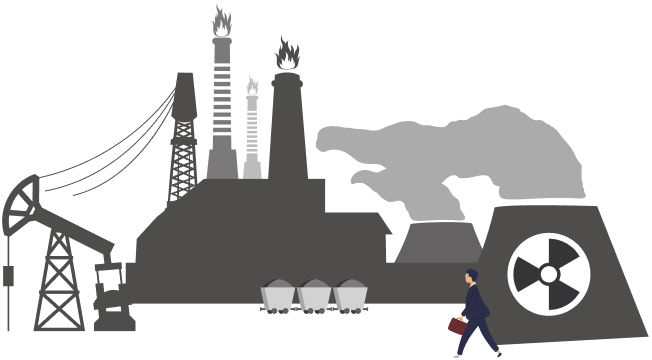
In 2020, the majority of our energy still comes from polluting fossil fuels. A shocking 82% of the energy consumption in the European Union comes from fossil fuel and nuclear. Equally problematic, much of the energy system is controlled by big companies that operate for profit.
But Europe’s energy system is now at a crossroads. The old system of overproduction, polluting energy and huge companies that run the system for profit is changing. A new system is being built, based on renewables. And much of it is decentralised, flexible, and owned by communities and citizens. This system is being built by people like you, who want to change the world for the better.
The electricity grid: a key fight
Big energy companies are causing problems for the climate and our communities because they hold massive political and economic power. These companies, and their subsidiaries, often own the electricity grid, which gives them power to decide who can access the energy highway. In France for example, Electricité de France (EDF) and its subsidiaries Enedis and RTE exclusively operate most of the country’s electricity transmission and distribution systems, preventing small and community-owned projects from distributing their energy through these networks. This just locks in the existing system.
Two systems vying for control
The old, fossil, corporate-owned system co-exists today with the new democratic, renewable energy system — and the old system is fighting the new. The big energy companies which still control most of our energy system are doing everything they can to maintain their power, publicly attacking community-owned renewables.
Part of their plan is to spread damaging stories, arguing for example that community energy projects only benefit a privileged few. The examples in this book will show you this is far from the case. On the contrary, people’s motivation is often to support their local community or their opposition to oppose polluting energy. This book also presents community energy projects that aim to take ownership of the energy grid, such as Schönau, the case study of chapter 13, to run it in the interest of people.
We need to speed up the transition to renewables and build the new energy system as fast as possible. That’s where you and your community come in!
Community energy production in Europe has huge potential: a recent study found that half of EU citizens – including local communities, schools and hospitals – could be producing their own renewable electricity by 2050, meeting 45% of the EU’s energy demand.
New EU laws could change the game
New energy legislation, agreed at EU level in 2019, should boost community energy and help community projects across Europe. Energy communities across the EU have won new rights that should guarantee they can participate in the energy transition. Acknowledgement of their role, and new rights to produce, consume, sell and store renewable energy are now enshrined in EU law for the first time.
This is an important opportunity to promote many more people-powered renewables projects, and for governments to support them.
These rights for community energy are included in the EU clean energy package agreed in 2019.
It also included the following targets for 2030:
- 40% cut in greenhouse gas emissions compared to 1990;
- 32% share of renewable energy sources in the EU’s energy mix;
- 32.5% improvement in energy efficiency compared to 2007.
However, things are changing fast, and (at time of writing) it looks likely these inadequate targets will be revised upwards under the European Green Deal.
New rights for communities
1) Citizens and communities recognised as actors in the energy system
The EU Renewable Energy Directive, agreed in 2019 contains new definitions that acknowledge how citizens can get involved in renewables through renewable energy communities (RECs). People, local authorities and small and medium- sized enterprises (SMEs) can set up legal entities to produce renewable energy, these RECs are recognised as playing a central role in the energy system and must be supported by EU governments. Through energy communities, citizens may generate financial resources through specially dedicated funds that are then distributed locally to provide services or to meet local needs.
2) Citizens are explicitly given the right to produce, store, consume and sell their own renewable energy
For the first time ever, EU law recognises that you as a citizen have a right to invest in the energy system. If you find that there are legal barriers to producing, storing, selling or owning your own renewable energy, it is the duty of your government to make sure that you actually can do these things.
3) Your government must create an enabling legal framework to support citizens
Every EU country is required to make sure the legal system supports community energy. Enabling frameworks could, for example, make support schemes available to provide funding for projects; or create an agency to provide advice and support, and to lay out rules to enable access to the energy grid.
4) Your government must simplify administrative proceedings for citizen and community projects
One of the difficulties of setting up a community energy project is administrative complexity. It’s good to be prepared for a lot of paperwork, for planning permission for example, or applications for financial support. Thanks to EU law however, it’s now the duty of your government to ensure that administrative procedures are simplified for citizen and community projects.
5) Your government must assess the barriers and potential of community energy
It is the duty of your government to assess the barriers and potential of renewable energy communities in your country. The law requires they do this by summer 2021, but some national governments are doing it sooner. Find out if this assessment has already been published! It will be a good source of information on the obstacles you can expect in your country.
East and West, different outlooks
The rights for communities mentioned above will be particularly useful for helping the energy democracy movement in Eastern Europe. This is because energy ownership is well developed in some Western countries such as Germany and Denmark but it is still in its infancy in many Eastern European countries. Some of the problems come from understandable scepticisms about cooperatives due to how cooperatives were mis-used during communist times. If you find this a problem in your national context don’t focus on the form your project should take but on the activities and how the benefits can be shared with everyone. We have tried to include some success stories from Eastern Europe but there are not yet as many successes to share there as we would like and sadly most of the success stories in this book are Western. We are working to change that and we hope you can too!
Getting politically active
Most of the advice in this handbook is aimed at making change by building the new system we want. Sometimes you might also need to get political with your local group, to push for changes at the political level. At the time of writing, EU laws are being transposed into national laws, sometimes slowly and inadequately. Check with the REScoop.eu or a Friends of the Earth group in your country to get the latest information on this process.
It’s important that your department or ministry of energy sees community groups demanding their rights to participate in the energy system. You could for example write a letter to your energy minister and your local political representatives, to explain your local group wants to be part of the energy transition. Let them know you expect the Renewable Energy Directive to be fully transposed into national law, to support your project.
The Renewable Energy Directive gives you rights, demand them!
- Vision Statement sets out demands for a future energy system for Europe which is sustainable, carbon-free, socially fair, publicly owned and controlled by local communities and people.
- This paper is a guide for national decision makers who face the task of putting aspects of the Clean Energy Package into their national legislation.