Community energy: A practical guide to reclaiming power
Making It Happen
Finding the money

One of the biggest challenges you will face is funding your project. You will need funding, in different amounts and forms, from the pre-planning stage through the development, investment and operation phases. This sometimes needs to happen at the same time, or even before you do feasibility studies.
Overcoming the financial barriers requires a mix of innovative approaches and using existing instruments. Some people are better at finance and fundraising than others, and a bit of experience or a head for numbers can help a lot. Bear this in mind when you think about who can be useful in your core team.
The good news is there are a variety of innovative solutions to choose from, from share offers, government support, bank loans and crowd-funding.
Options for finance
1) Grants
One good option, especially in the early stages of your project, is to apply for a grant. Check out what’s available at the national or regional level. There could be community development grants run by your national government for example, that could help cover early costs.
For most of these applications you will need your group’s constitution or mission statement, and you will need to explain what you want to achieve with the money.
If you are writing a grant application for the first time, find people to read it over: there are bound to be people in your community who have prepared these kinds of applications before. And if your first application gets rejected, don’t despair, be prepared to dust it off, improve it, and submit it again.
2) Crowdfunding
Community energy projects typically get financed by citizens, and there are a variety of crowdfunding schemes at your disposal.
- Some projects get financed through donations, where citizens don’t expect anything in return: they put in money simply because they believe in the project and they want to support it.
- Bonds are loans and get paid back after a certain period of time: citizens will expect a financial return for their investment (interest).
- Shares are not loans and do not have to get paid back. Shares give ownership and a say in how the cooperative should invest. Citizens energy cooperatives typically finance their projects by issuing shares. It’s worth checking whether there’s any national regulations on public share offerings, because you might need a prospectus first.
3) Traditional bank loan
“Good projects find funding”: at least that’s what banks would like us to believe. It might be worth checking whether a traditional bank is willing to step in and provide a loan for your project, but the reality is often more complicated than that. Starters without a track-record often find it hard to obtain loans from traditional banks.
Another thing to keep mind is that banks will usually provide up to 80% of the funds, leaving a community energy project with the challenge of finding 20% themselves.
4) Ethical or cooperative bank
If traditional banks are unwilling to finance your project, you may consider reaching out to ethical or cooperative banks. On the website of the European federation of ethical and alternative banks (FEBEA), you will find out contact details of ethical and alternative banks that operate in your region.
5) Third-party financing
If banks don’t want to provide funding, you may still consider third-party financing. This third party could be an established cooperative. BeauVent from Belgium and Som Energia from Spain provided Boa Energia from Portugal with a loan so that they could do their first project. The loan was paid back once the project got visibility and citizens decided to join.
6) Leasing
Leasing means that you rent the renewable installations from a third party, who gives you the chance to buy the installations after a certain period of time. Leasing can be interesting for starters who might need a few years to raise funds from their members.
7) Cooperative fund
Renewable energy projects are capital- intensive investments, especially at the beginning. At the same time, citizens often come on board only when a project is up and running, and they can see its results with their own eyes. If you want to involve citizens in renewable energy projects, cooperatives need to put up the upfront investment. Starters might be in need of money, whereas established initiatives might be in need of projects. A cooperative revolving fund might provide opportunities for collaboration.
8) Local authority or municipal support
The Rumbling Bridge Hydro Coop in Scotland was set-up with support from a CARES development loan and Energy4All, another cooperative. The hydro cooperative now owns a 500-kW run-of-river hydro power station. So far, the output from the turbine has exceeded the projected output, so the local community stands to earn a considerable community benefit from the scheme over the projected 40 years of operation.
Traditional vs. Ethical banks
Going to a normal or traditional bank can be one of the most difficult ways to raise money, as many banks are not well equipped or willing to dedicate resources to such projects — they often simply do not understand them.
The solution can be collaboration with ethical and alternative banks, their DNA makes them more receptive to cooperative and community values and more understanding of your constraints. They are more usually much more willing to follow and support smaller projects, and it is always worth supporting ethical and cooperative banks. The more they grow, the better the chances are for other community energy projects to be financed!
With new rights afforded by EU laws, more and more projects should be set up, and it should become easier for more financial institutions to understand the common risks and returns for community energy.
-
The share offer model
More info
A very successful model used by a lot of cooperatives is offering shares. This is a way of raising money, and it also creates members with decision making power. Members of the cooperative wear multiple hats, combining ownership, investment and use. Each of these hats or roles is associated with specific responsibilities and decisions.
- By acquiring shares, members become owners of the project, and therefore participate in the control of the organisation.
- By acquiring shares, they also become investors, and in this respect, they may expect a return on their investment, be it financial, social or environmental.
- Through economic participation, they become users of the cooperative, and get the right to “use” its services.

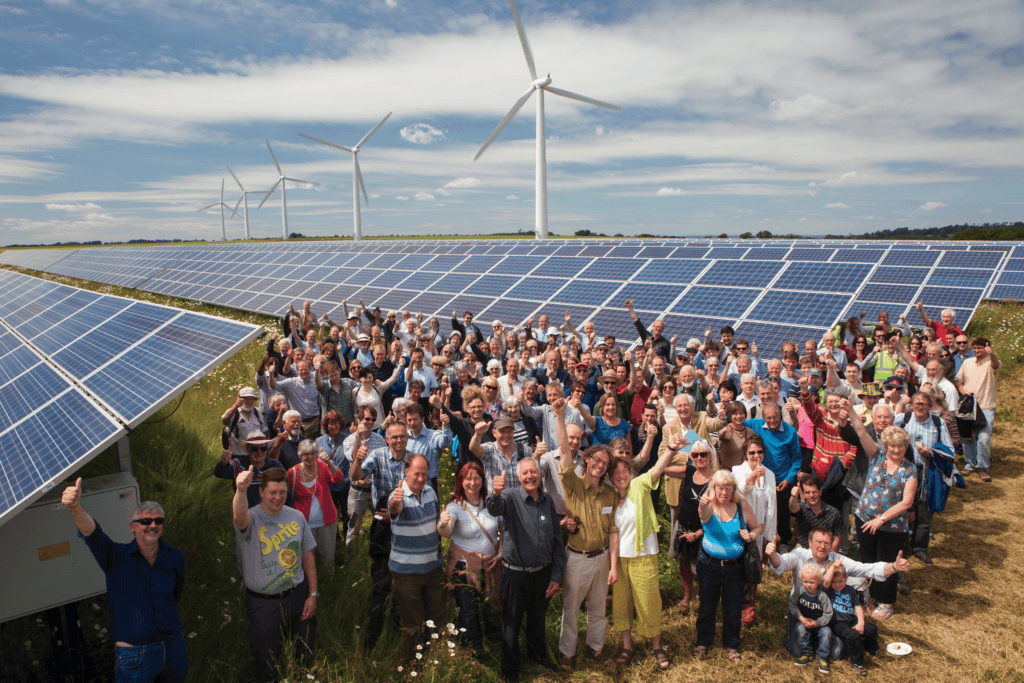
Westmill Wind & Westmill Solar cooperative. © Westmill Wind Farm Co-op.
-
Funding wind
More info
The Netherlands
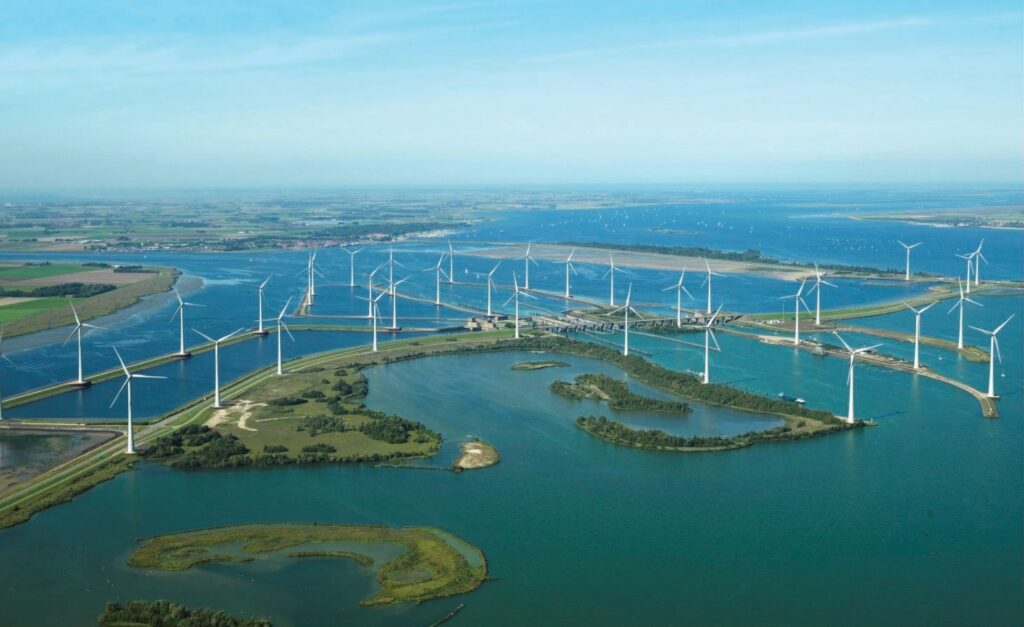
Zeeuwind and Deltawind from the Netherlands are two local citizen energy cooperatives that successfully worked together to develop a 102 MW wind project worth 215 million Euros called “Windpark Krammer”. This is an option to think about, look around in your country or region and see if there are other cooperatives that you can work with. This can help with financing big projects such as wind.
The two Dutch energy cooperatives Zeeuwind and Deltawind worked together to develop Windpark Krammer. © Sky Images To reach a financial close in 2018 the two cooperatives initially sold 49% of their project to the wind turbine manufacturer Enercon. As well as the existing members of the two cooperatives local citizens could also participate directly by buying bonds. This raised further capital. In only two days, they managed to raise over 10 million Euros.
Now that the project has been completed and the wind turbines are operational, Enercon is willing to sell its part.This gives the cooperatives the chance to increase their ownership over the project. The two cooperatives will launch a second financing campaign in October 2020 to raise another 6 million Euros and obtain a 60% majority in the project. This could be a solution for your project as well, especially if you work with a friendly wind-turbine manufacturer such as Enercon. There are almost always solutions to finding the money and by working with others you can make it work!

- Investment needs for the local energy transition.
- Innovative financing model for energy efficiency: Ecopower, Pajopower and Brixton.
- Report on financial barriers and existing solutions.
- Financial Handbook for REScoops (EN/GE/FR).
- REScoop book: Mobilising European citizens to invest in sustainable energy.
- European Association of Co-operative Banks (EACB).
- European Federation of Ethical and Alternative Banks and Financiers (FEBEA).
- Find out more about the seven programmes funding the European Energy Transition.