Community energy: A practical guide to reclaiming power
The Different Forms of Community Energy Projects
Municipalities & local authorities: an ideal partner

Whatever the size and form of your group, it’s important to work with your local government: the most successful community energy projects in Europe are those where groups collaborate with local authorities. Local or regional governments have everything to gain from promoting the scale-up of community energy in their area, and they can initiate new projects themselves.
However, despite the growing popularity of the concept across Europe, many cities are still struggling to move from ideas to action. Many local municipalities have committed to energy or climate targets, but reaching these can be a struggle. Often the ideas come easily, but making things happen is trickier.
Energy Cities, one of the organisations that produced this book, is a great place to start looking for contacts and helpful information. There are many resources and networks across Europe for progressive local authorities who want to be part of the energy transition.
This chapter provides you with an overview of the different stages of the process, and the levers available to become a community energy champion, whether you work for a municipality or wish to collaborate with one.
The first step for you, is to promote the concept to the council political majority. This will be the task of your group, and the municipal staff and local elected representatives that you work with. If your local authority has not yet signed up to the Covenant of Mayors you could start a mini campaign to encourage them to do so. Highlight the example of cities in your country that have signed up to the initiative, especially if they are considered front-runners.
-
Covenant of mayor and SECAPs
More info
The EU Covenant of Mayors is a network of thousands of local governments who have voluntarily committed to implementing EU climate and energy objectives. In order to translate their political commitment into practical measures and projects, Covenant signatories are asked to submit a Sustainable Energy and Climate Action Plan (SECAP) outlining the key actions they plan to undertake.
All the local governments that have signed up to the covenant of mayors commit to three objectives.
- accelerating the decarbonisation of their territories,
- strengthening their capacity to adapt to unavoidable climate change impacts,
- allowing their citizens to access secure, sustainable and affordable energy.
To see if your local authority has signed up to the Covenant of Mayors check out: https://eu-mayors.ec.europa.eu/en/signatories
Community energy projects can be seen by your local authority as too complex, or too different from the local authority’s usual activities. Here are some arguments that can overcome a municipalities initial reluctance when you start working with them:
- Trust in cooperatives and other community-oriented projects is often built quickly, and both entities can become long-term partners, building their capacity mutually. As both the cooperative and the local authority are mission-driven rather than profit-oriented, they share the same long-term objectives. In Belgium for example, several cities have gained expertise and benefited from the support of the energy cooperative Ecopower to develop and activate their Sustainable Energy and Climate Action Plan (SECAP).
- Community energy schemes bring many local benefits beyond contributing to climate objectives. Projects designed and carried out by energy communities with strong democratic governance structures don’t just reduce CO2 emissions, they also contribute to other strategic local policy objectives. Projects that are steered by local cooperatives or non- profit foundations have helped local and regional authorities to:
- Improve energy efficiency and reduce energy poverty, either through cheaper tariffs or dedicated schemes to actively involve and support vulnerable consumers (see chapter 15 on energy efficiency and combating energy poverty).
- Enable a more active form of local citizenship, as these initiatives encourage inhabitants to feel more involved and concerned about their neighbourhood, encouraging them to engage in other sustainable activities such as urban agriculture, recycling initiatives, repair cafés, shared mobility and so on.
- Boost local economic development, as projects owned by local community members can contribute up to 8 times more to local added value creation.
There are various ways through which local government can either support or directly engage in the development of community energy.
One important first step is to ensure local authorities politically commit to community energy development, with long-term plans and roadmaps. This can include pledges to more directly include citizens in climate and energy policy-making (through the organisation of debates and dialogues, the launch of participatory budget schemes, etc.)
Local and regional authorities can also adopt concrete long-term objectives related to energy production, such as a specific target to quantify community- owned renewable production capacity, in megawatts or as a percentage, within a certain timeframe. Sustainable Energy and Climate Action Plans (SECAPs) are an example of this, discussed in more detail below. Political commitments can also go beyond energy — Edinburgh’s City Council has pledged to support cooperatives in general for example.
-
How Occitania is becoming a French hub for citizen energy
 More info
France
The French Region of Occitania started to offer financial and logistical support for citizen energy projects in 2014 and it became home to the first two 100% citizen owned PV parks of the country (“1,2,3 Soleil” and “Le Watt citoyen”). The local government of the region has committed to becoming the first Positive Energy Region in Europe by 2050.
In order to reach this ambitious objective, they regularly launch calls for citizen energy projects in cooperation with the French Environment and Energy Management Agency (ADEME) to financially support the creation of local energy cooperative and citizen-owned energy companies. Together with ADEME, they also established the network ECLR (Energies Citoyennes Locales et Renouvelables) in 2014, to support knowledge sharing and create a space for discussion among citizens in Occitania. Today, ECLR brings together more than fifty project leaders – citizens, professionals and communities – engaged in the development of citizen and community renewable energy and acts as the main info point on community energy in the area.
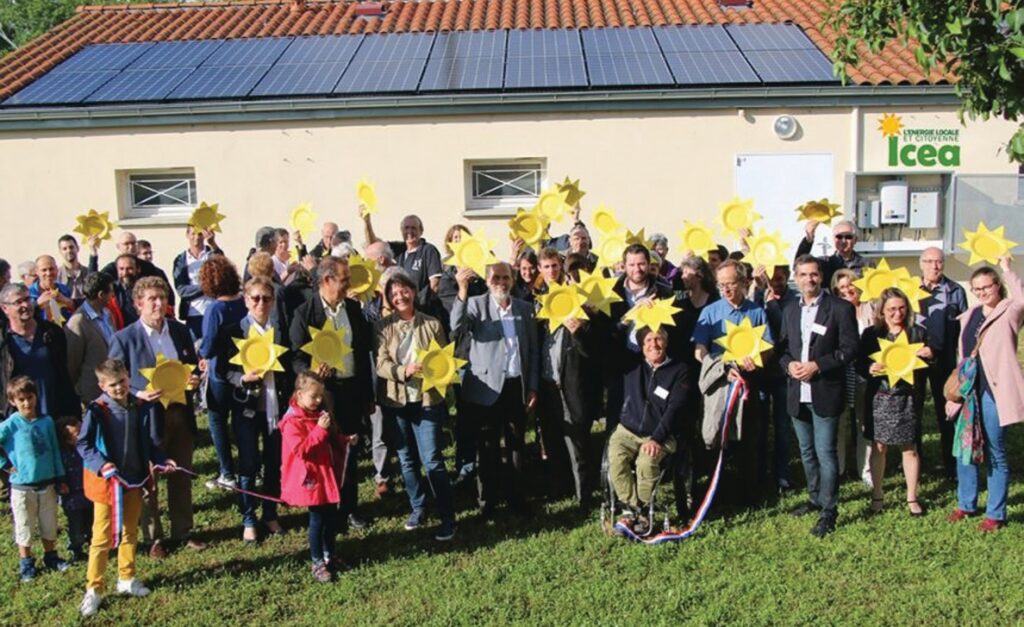
he cooperative “Citizens’ initiative for an alternative energy” (ICEA) brings together 364 citizens committed to make the world better. They installed solar panels on the roofs of public buildings for their city. The project benefited from the support of ECLR Occitanie, as well as financial assistance from the region. © ECLR Thanks to the regional support, community energy projects have been flourishing! Since 2014, 46 projects have been awarded, many of them already producing renewable energy with around 3000 citizens of the region and 40 communities involved. A total of €800,000 in regional aid has been allocated and has generated €2.6 million in local investment.

What can your municipality do?
1) Favourable regulations for citizen and community energy
Local and regional authorities can adopt specific land-use or buildings-related regulations that favour the development of citizen or community-owned energy sources. This could be key in getting your project to completion.
- Barcelona was the first city ever to adopt a “solar thermal ordinance”, making it compulsory for new and renovated buildings to supply 60% of their hot water requirements through solar energy.
- In Denmark, where most of the heating systems are community or municipally- owned, local authorities can mandate that existing and new buildings must connect to the district heating network.
Regulations and subsidies supporting community energy are highly dependent on an adequate legal framework at the national level. According to new EU legislation, member states must guarantee the development of this framework, following an in-depth assessment of the opportunities and obstacles linked to community energy in their country. They are also required to build local authorities’ capacities in this field.
2) Raising awareness
Energy literacy is another important concept to consider: the more people are engaged in activities related to energy, the more they understand the overall energy system. Your local authority can be key in supporting energy literacy. Sharing your technical expertise, not just with fellow citizens but also with the city, will be crucial to engage this local actor.
3) Buying power or heat from community projects
To meet the energy demand of all the public buildings they operate, local authorities can favour “green” but also “community-based” energy procurement. In Belgium, many cities in the Flanders region have started developing preferential criteria in their public tenders for citizen- owned energy supply. This was the case of the city of Eeklo, which commissioned the construction of a district heating network with a minimum of 30% citizen ownership.
Another option to be considered for high energy consumption public facilities is to sign direct Power Purchase Agreements (PPAs) with energy communities. These long-term contracts provide investor certainty to communities: allowing them to benefit from a stable revenue stream (based on a fixed electricity price over a long-term period) in the absence of dedicated support schemes.
4) Financing and guaranteeing projects
One common obstacle faced by community energy projects is access to credit. Local and regional authorities can be crucial in providing guarantees for financial institutions. Their participation in energy communities can also reassure hesitant investors by giving additional credibility and legitimacy to the projects. Local authorities can also provide seed funding, for example through a revolving fund for community projects.
In addition, they can also dedicate specific budget lines to support community groups every step of the way, from the initial feasibility and planning stages to actual investment in the infrastructure, this is the case for example of the successful CARES scheme in Scotland.
-
How Scotland supports community energy: CARES
More info
Scotland
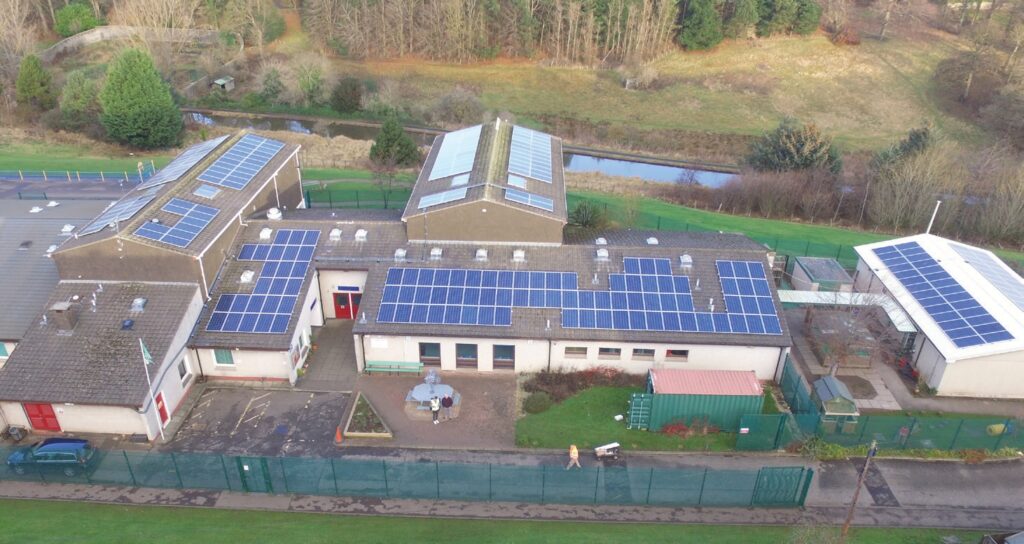
The CARES scheme, funded by the Scottish government and administered by Local Energy Scotland, gives grants to energy communities to finance different project development activities — including feasibility studies, permitting procedures, community engagement activities, even capital costs of renewable energy projects.
Following the motto “feasible, permittable, profitable”, this scheme helps communities through the first, often lengthy and expensive steps to setting up their own renewable energy project. If the project sees the light of day, these grants turn into loans that will gradually be paid back by the community.
Ratho Primary School, Scotland.
5) Sharing municipal staff and resources
As large owners of public buildings, land and infrastructure, local authorities can also grant dedicated space to community projects, for example by offering the rooftops of buildings they own. This is the case of the Edinburgh Community Solar Co-operative. Councillors sitting on the board of the Bencom helped navigate various committees and processes.
Another possibility is human resources, especially as energy cooperatives often depend on inexperienced, voluntary citizens to put their projects together. In the UK, the Plymouth City Council supported the creation of the Plymouth Energy Community (PEC), by allocating staff to design a business plan and support the recruitment of 100 founding members.
For community heat projects, municipal authorities can also provide access to municipal waste, or other types of bioenergy resources.
6) Developing supporting platforms and tools
Local and regional authorities can give crucial support to community energy projects by designing dedicated supporting tools and programmes. In Ireland for example, Dublin’s energy agency coordinates support to over 80 energy communities by appointing a “coordinated mentor” in each local authority of the Dublin region, to guide them through a three-step process called “Learn – Plan – Do”.
Mapping potentials is yet another fairly straightforward way to help citizens and cooperatives get started, by providing an overview of local deposits in terms of renewable energy. In Lisbon, for example, the city developed a solar cadastre. Other cities are developing heat atlases to do the same with waste heat or geothermal energy.
7) Facilitating dialogues between local stakeholders
Small energy communities may have useful contacts and resources, but local authorities can have a bigger reach. The local authority can be very helpful in putting you in touch with relevant economic players, and other societal, environmental or energy actors in the area.
Energy agencies can also be involved, as they already work closely with cities in many cases and can support the establishment of community energy schemes — whether to find members, funders, fuel providers (like bioenergy crops in the case of heat cooperatives) and crucially, to build a good relationship with the distribution system operator. In Grenoble, France, for example, the metropolitan authority helped the local energy community sign a cooperation agreement with the distribution system operator Enedis.
8) Becoming a direct member of an energy community
Lastly, but strategically, EU legislation now encourages local authorities to become actual members and shareholders of energy communities, together with their citizens and local SMEs, without taking full control. They can do so in the field of energy generation, but possible activities span all energy services, from mobility, energy efficiency, aggregation, balancing, etc. For more information on the criteria and specificities linked to the legal definition of energy communities, see the definitions box in chapter 4.

-
The long road to creating a community wind park in Neuenkirchen
More info
Germany
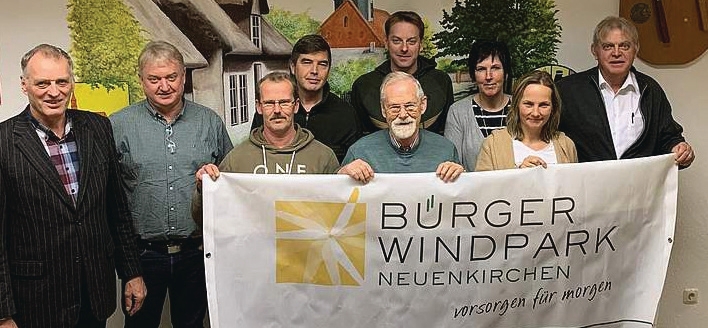
The Neuenkirchen wind project is a large community wind project in the federal state of Schleswig-Holstein in Northern Germany. It consists of twelve 3 MW wind turbines across three sites. The project produces income for the farmers, landowners and for the local community through a Bürgerverein or benefit-sharing civic association. It was initiated by these local farmers and landowners in 2007 because they wanted to diversify their own income and to bring added value to the local rural economy.
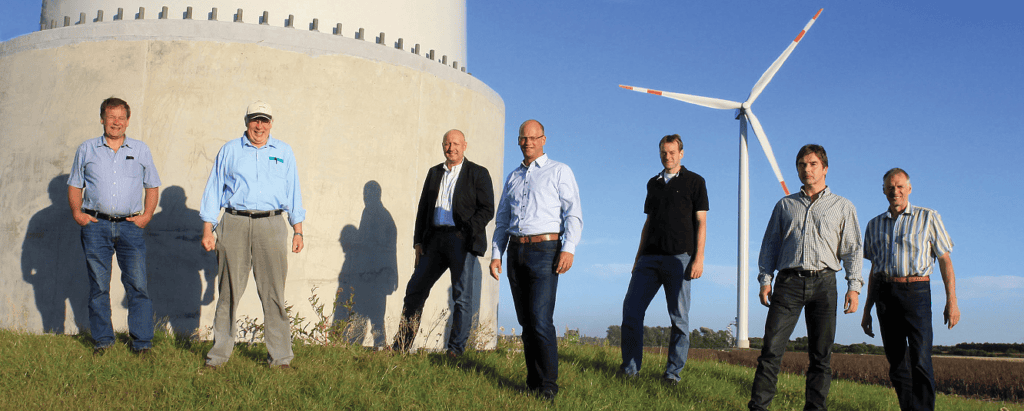
The manager of the Neuenkirchen windfarm with members of local clubs that they have supported with financial profits from the windpark. © Neuenkirchen The initiators of the windfarm in Neuenkirchen, Schleswig-Holstein. © Daniela Wehrmeier, Neuenkirchen The former mayor and parts of the municipal council were against the proposal of a group of local landowners who wanted to develop a community wind farm. Without support at the local municipal level the project was blocked.
The project initiators realised that they needed to put more effort into community outreach and relationship with the municipality. They realised that many other municipalities in their area were involved in wind projects and were benefiting significantly from them. This was a useful way to get the local council on board.
The situation changed after the local elections of 2008, and a new mayor was elected. The mayor was interested in this project and encouraged the farmers to set up the benefit sharing civic association. However, a local opposition group was also founded that further slowed the project. In this case, the support of the municipality became even more vital. However, 2 local referendums in 2009 and 2011 were necessary to finally approve the suitable areas for the wind park in the respective regional plan. Following the approval of the regional plan, the operating company “Citizen Wind Farm Neuenkirchen” was established in 2013 and the farm was commissioned 2 years later. 34 landowners now receive financial compensation for the use of their land via a land lease pooling model, allowing also landowners in the surroundings of the wind farm to profit from it.
Citizens could directly become partners in the project with limited liability. 145 citizens from a total population of approximately 1,000 became limited partners. The municipality also obtained shares of approximately 20,000 Euros in the wind farm, the maximum legally allowed, to show its commitment to the project and the trustworthiness of its initiators. In addition to business tax revenues for the municipality, in 2016, a civic non-profit association was established, receiving 1 of the wind farm’s annual gross remuneration. While the biggest benefits from this project go to the local farmers and landowners, the “Bürgerverein” ensures that there are benefits for the community as a whole. Things they have supported in the past include the purchase of community busses, PC-equipment for the local school, and even church renovations. Without the support and engagement of the municipality, this project would likely never have been built.
- How local Authorities can encourage citizen participation in energy transformations.
- How cities can back renewable energy communities.
- ICLEI resources on building to 100% renewables.
- Democratic transition factory Involving citizens in Europe’s energy transition (in French).
- The LICHT methodology.
- The REScoop municipality approach.
- Exploratory study of public initiatives working on the issue of remunicipalisation (UK).
- The SCCALE 20 30 50 Community Energy Municipal guide.