Community energy: A practical guide to reclaiming power
Choosing Your Technology
Solar
The majority of community energy projects being built in Europe are solar. In many ways, solar is the perfect technology for community projects. Even though it doesn’t produce as much energy as wind, it’s a great place to start due to its cheaper price and simpler planning processes.
If you work in local government, solar energy should be high on your radar: it’s a great fit for urban environments and a great contributor to local job creation and economic development. Small-scale PV installations are typically more labour- intensive (in engineering, installation, maintenance, auditing) than centralised technologies, creating three times more jobs per capacity unit.
If your city has committed to the Covenant of Mayors for Climate and Energy, you probably have targets for local renewable energy deployment. The good news is, with the help of local citizens, you can achieve quick and impressive results! Policies and business models can be developed to:
- Assess the city’s rooftop potential,
- Increase the rate of solar energy deployment on all buildings through specific regulations.
Whatever your strategy, be aware of potential obstacles citizen groups and communities you cooperate with might face. These include:
- Heritage-related issues on listed buildings,
- Conflicting priorities between green or solar roofs,
- Agreeing on the right number of solar panels
- Making sure you get good cooperation with distribution system operators.
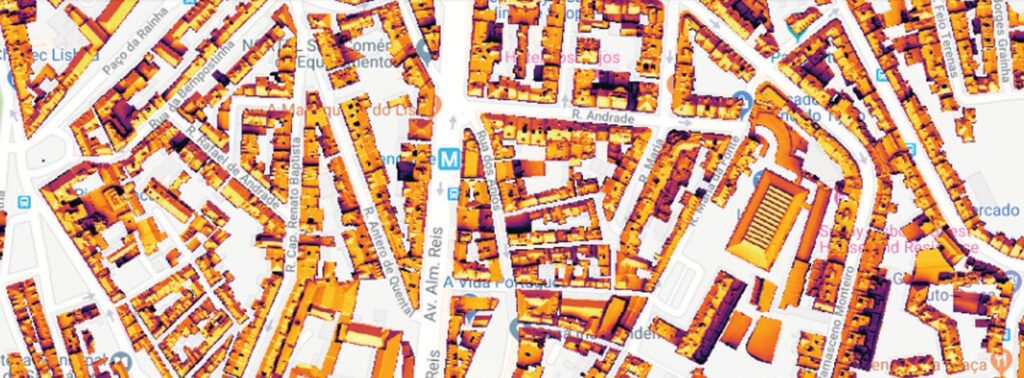
Both Paris and Lisbon have developed cutting-edge tools to provide citizens, community groups and small businesses with an estimation of the solar thermal and photovoltaic potential of the citys’ rooftops, taking into account many parameters including the buildings’ shape, orientation, slope, etc.
European cities back solar
Many EU cities have adopted specific targets to link their political commitments to quantitative objectives. In Lisbon, the city pledged to reach a cumulative installed capacity of 103 MW by 2030. In Barcelona, the local authority required solar water heaters to be installed in all new and renovated buildings across the city, an unprecedented move in Europe at the time, inspiring around 70 other Spanish municipalities to do the same.
Cities are becoming more and more innovative when it comes to designing new partnership models with their citizens, especially to scale up solar power. In Brittany (France), the city of Lorient partnered with a citizen investment cooperative called Oncimé, to launch a unique solar panel rental scheme.
-
A Lisbon solar map to create a new generation of energy citizens: SOLIS
 More info
Portugal
“Lisbon Solar City” is Lisbon’s solar strategy and an integral part of the Sustainable Energy and Climate Action Plan (SECAP), approved by the municipality in the framework of the Covenant of Mayors for Climate and Energy. Based on this strategy, they city set some ambitious goals:
- By 2021, a cumulative solar capacity of 8 MW installed in buildings;
- By 2021, a capacity of 2 MW installed in a centralized power plant feeding the public fleet of electrical buses and waste management trucks;
- By 2030, a cumulative capacity of 103 MW will be installed in the city.
The SOLIS partnership is the cornerstone of this strategy. The project was the result of a partnership between the energy agency and the municipality. Co-financed by the Portuguese Ministry of the Environment, a multidisciplinary team of experts in Solar PV technologies, geographic Information
Systems, cartography, communication and marketing worked on the platform.
Using appealing graphics and some key figures, SOLIS offers citizens, local authorities, investors and businesses three different mapping products, at three different scales – the city, the parish and the building:
- an updated solar radiation map, delivering the impinging amount of solar energy in the city’s roofs;
- a solar electricity generation map, both potential and (estimated) actual energy, with the additional functionality of estimating key self-consumption figures at building level for a specific citizen profile;
- an informative map of PV installations in the city and its evolution over time
But SOLIS is more than just a map: it gives citizens the opportunity to be involved in the local energy system. They can register their own solar systems and provide their feedback and testimonies. They have the possibility to estimate the electricity production from their rooftop and the associated investment and revenue. Also, the platform offers information on market rules and educational content such as infographics and short animated films to create a new generation of solar energy citizens!
Solis Solar Radiation Map. © Solis

-
Renting solar: Lorient
More info
France
The French city of Lorient in Brittany and OnCIMè achieved great success with its ground-breaking solar panel rental system. OnCIMè is a local project dedicated to developing renewable energy sources, aiming to tackle global warming and create local jobs. The partnership between Bretagne Énergies Citoyennes and the City of Lorient was innovative, combining PV panel rental and citizen engagement around a project based on self-consumption.
How does it work?
1. Self-consumption: the electricity generated by the PV panels is used directly by the buildings on which they are installed. This is particularly suitable for buildings that are occupied during the day: schools, administrative buildings, office buildings, etc.
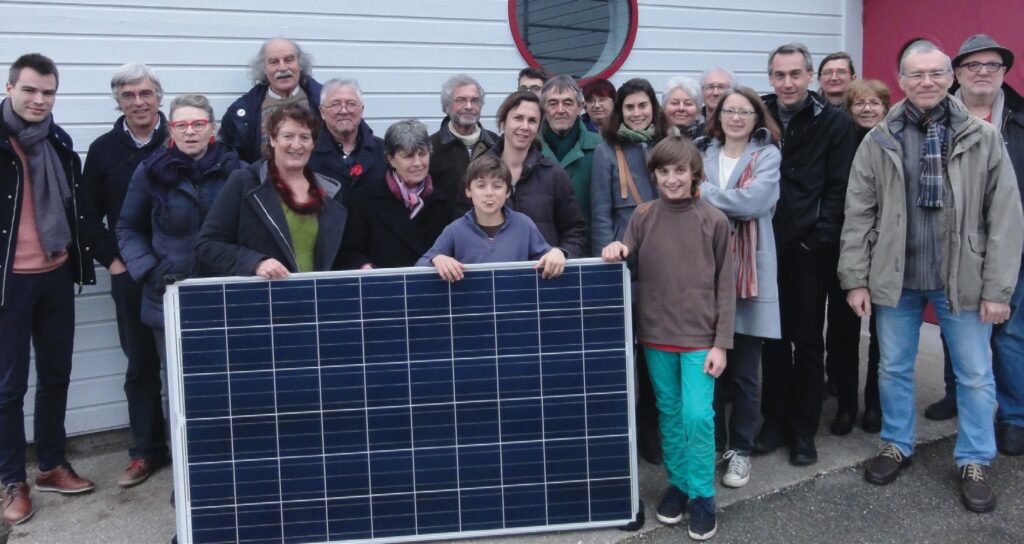
Some of the people involved in the OnCIMè project in Lorient. © Bretagne Energie Citoyenne 2. Rental: OnCIMè, following a public tendering process, has a rental agreement with the city of Lorient. The municipality pays a monthly rent in exchange for the right to use the solar panels, and install them on the roofs of its buildings to generate electricity, which is cheaper than buying grid electricity.
The shareholder base is mainly local, and the “one person one voice” governance rule is in line with the spirit of a social and inclusive economy. OnCIMè also organises events every year in buildings equipped with solar panels for students and city staff, to raise awareness on solar and renewable energy.
In 2019 OnCIMè had more than 100 shareholders, nearly 400 rented PV panels and a plan to finance a PV station on an organic shop in Lorient. Solar offers exciting collaborations!

-
Citizen's power plants: Vienna
More info
Austria
Setting up individual renewable energy system is not always an option, especially in cities where the majority of the population lives in flats. That is why in Vienna, the city-owned energy utility Wien Energie, launched the “Citizen’s power plants” in 2012.
Wien Energie installs solar panels on suitable buildings and offers citizens the opportunity to buy a maximum of 10 at a price of 950 € per panel. Wien Energie is also in charge of building and operating the photovoltaic systems and bears the technical and economic risks. The citizens then lease the modules back to Wien Energie and receive a yearly return on their investment, which can also be given as vouchers thanks to a collaboration with the SPAR supermarket chain. The owners always have the possibility to give the panel back to Wien Energie at the full price. At the end of the term of the rental agreement the initial investment is returned to the investor.
Since May 2012, more than 6,000 Viennese citizens have contributed to the development of renewable power within the city. Citizens were able to contribute to the wind park Pottendorf, with a capacity of 3 megawatt that can provide energy for 1,800 households.
Thanks to this initiative, more than 6,000 Viennese citizens have contributed to the development of renewable power within the city. Wien Energie aims at increasing the share of renewable energy in total electricity production to 40 per cent by 2030. Wien Energie has realised 24 solar energy projects and 4 wind turbines. In 2015 the participation model was extended to wind energy. Right now, they deliver renewable energy to 800,000 people but they expect to reach 1.5 million people by 2030!