Community energy: A practical guide to reclaiming power
Choosing Your Activity
Heat

Heating and cooling buildings represents a lot of energy, money and CO2 emissions due to inefficient systems. The good news is, you can build sustainable and efficient heating and cooling systems, and they can be community-owned! In the Netherlands, the community of Groningen took over the district heating network for example, to cut gas entirely from their supply.
The easiest way to get started is by thinking about district heating systems. District heating systems are where heating is taken care of on the city or town level. Many municipalities distribute heat through a system of hot water traveling through insulated pipes. This is then used to heat water or space in homes and businesses. The heat is produced centrally and can be from burning of fossil fuels or from by-product heat from some industrial process. These systems can be transitioned to renewables. Find out if your town or city has a district heating system and how it is powered.
-
Hvidovre Fjernvarme: a district heating cooperative
 More info
Denmark
There are hundreds of heating cooperatives in Denmark, where heat demand is high, legislation is supportive, and cooperatives can access cheap loans through municipalities. Hvidovre Fjernvarme is a cooperative of 250 members and 33,000 consumers, including the Hvidovre municipality, providing heat from renewable sources to its inhabitants. Together with three other district heating cooperatives (FDHvidovre, Avedøre and Rebæk Søpark), they deployed a program to help members optimise their heating installations, allowing them to save energy and money.
Every second year, the cooperative checks the consumers’ heating installations for free. The first check includes an analysis of the district heating unit as well as a report on the energy performance of people’s homes, assessing their consumption. The report also provides recommendations on ways to optimise their home’s energy efficiency. Every two years, a maintenance check of the district heating unit is performed in case adjustments are needed.
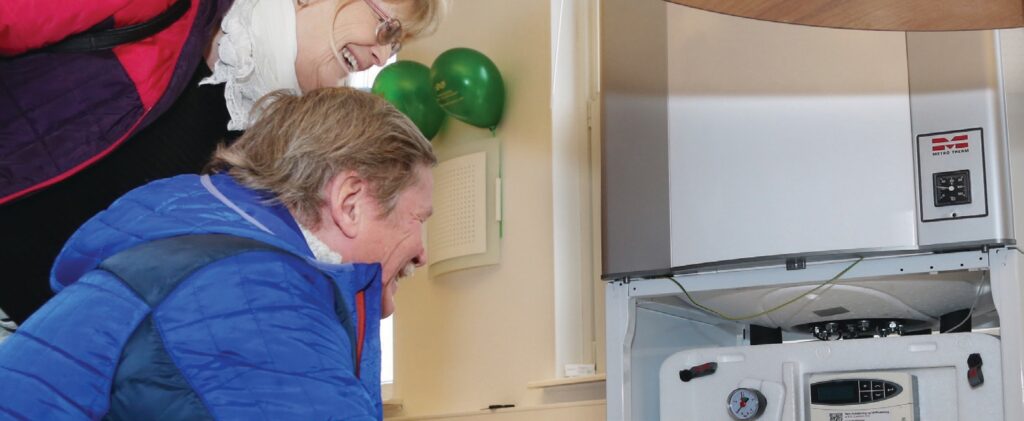
Every year, EBO Consult organises a Heating Day at the Hvidovre District Heating Cooperative to inform the citizens of Hvidovre about district heating and energy savings. © EBO consult

-
Achieving sustainable heating
More info
France
In France, the joint “Forestener – the Citizen Heat” project supports local wood-energy projects by mobilising local savings to design, finance and operate wood-based heating systems, in collaboration with local residents.
In Lucinges, a village in Haute-Savoie, an innovative community heating network co-financed by citizens and managed by public authorities was created in 2018. The district heating network called Forestener provides heat for municipal buildings, and aims to heat all buildings in the centre of the village. The one kilometer long network aims to heat 60 collective housing units, 5 individual houses, the school, the school canteen, the town hall, the public library, the community centre, two cultural centres, an organic beer brewery, and one company.
The furnace room is equipped with two wood boilers, which will deliver 1100 MWh per year to its users. Before installing this heating network, the village’s heating ran on fuel and propane, through old installations. As the municipality was building new housing units, they decided to centralise the heating system and to switch from fossil fuels to sustainable, wood-based solutions. Before, half of the amount on the energy bill benefitted actors outside the community. The new system helps keep these energy revenues within the village, which the community can use to further improve its infrastructure. The wood chips used come from a nearby forest, to keep transportation needs to a minimum.
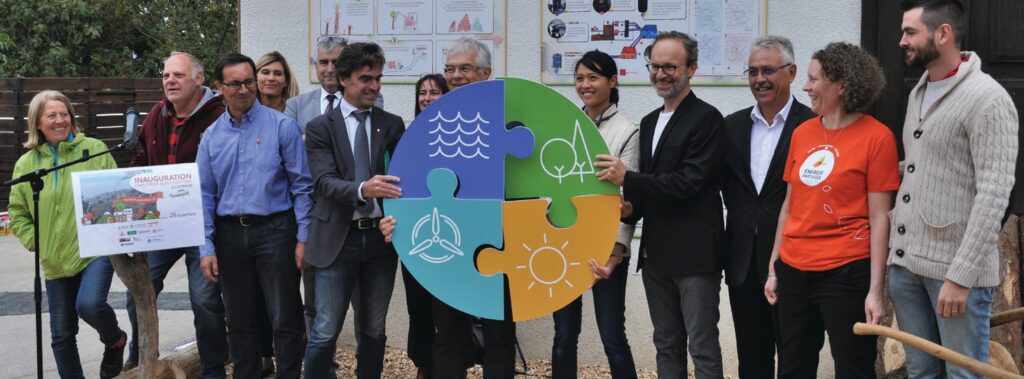
The Forestener project is a great example of transforming a city's heating system by working together with the local community. © Énergie Partagée The secret ingredient of this project is citizen involvement. The governance of the project is participatory and democratic, and around 45 people invested in the system to support its launch with the support of French cooperative association Énergie Partagée, motivated by its ethical, local and environmental benefits. By now, more than 5,000 citizens have become investors in Forestener and other projects supported by Énergie Partagée. The French region of Rhône-Alpes was also a key supporter, providing this project with €442,000, and the project received a loan from the ethical bank La Nef.